This short guide explains the parts of an implant in plain language. If you are thinking about replacing a missing tooth, this article will help you understand the main components, why each one matters, and what to ask your dentist.
Expect a clear overview you can use during consultations. By the end you’ll know the basic parts of an implant, common material choices, and simple next steps to move forward.
Understanding the parts of an implant
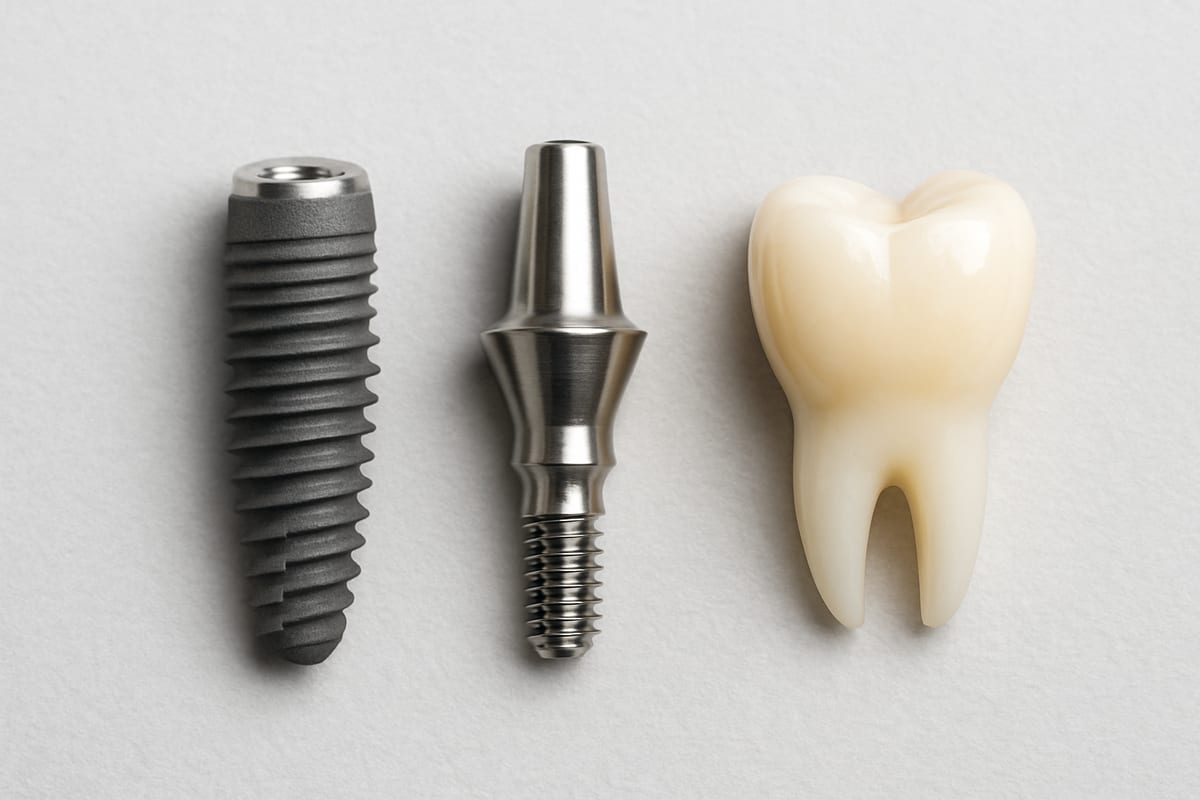
Dental implants typically have three core parts: the implant fixture (the root), the abutment (the connector), and the crown (the visible tooth). Together these parts replace a missing tooth from the bone up to the chewing surface, restoring function and appearance. Knowing each part helps you make better choices about materials, costs, and care.
What each part does and common options
The implant fixture (the root)
The implant fixture is a small post placed into the jawbone. It’s usually titanium or zirconia and acts like a tooth root, anchoring the rest of the restoration. Good bone health is important because the bone must integrate with the fixture to give long-term stability. If bone is thin, your dentist may recommend grafting or use specific implant designs.
The abutment (the connector)
The abutment sits between the fixture and the crown. It connects the root to the visible tooth. Abutments come as stock (standard) or custom-made to match your gum shape and bite. You’ll also hear about screw-retained versus cemented connections: screw-retained abutments allow easier removal, while cemented ones can look smoother but may need careful cleaning to avoid trapped cement.
The crown (the visible tooth)
The crown is the part you see when you smile. Crowns are usually porcelain or ceramic to match tooth color, or metal-ceramic for added strength. A well-made crown is shaped and shaded to blend with your natural teeth. With normal care, crowns often last 10–15 years or longer, but wear, bite forces, and oral hygiene affect lifespan.
Variations, materials, and factors that affect choice
Choices depend on health, appearance goals, and budget. Common differences include:
- Titanium vs zirconia fixtures — titanium is well-tested and strong; zirconia is metal-free and can be more aesthetic for certain cases.
- One-piece vs two-piece systems — one-piece implants integrate abutment and fixture but limit adjustability; two-piece systems allow more customization.
- Additional parts — healing caps, temporary abutments, and surgical guides may be used during treatment.
Your medical history (like diabetes or smoking), gum shape, and bite force also guide material choice and design.
How to choose the right implant parts and next steps
Start with a clinical exam and 3D imaging so your dentist can recommend suitable parts. Ask about materials, connection type (screw vs cement), practitioner experience, and any warranties. Consider long-term maintenance and replacement costs, not just the initial price.
Our office discusses the parts of an implant, materials, and cost options with patients to help plan treatment. To learn what’s best for your mouth, schedule an evaluation and 3D scan with your dental provider.