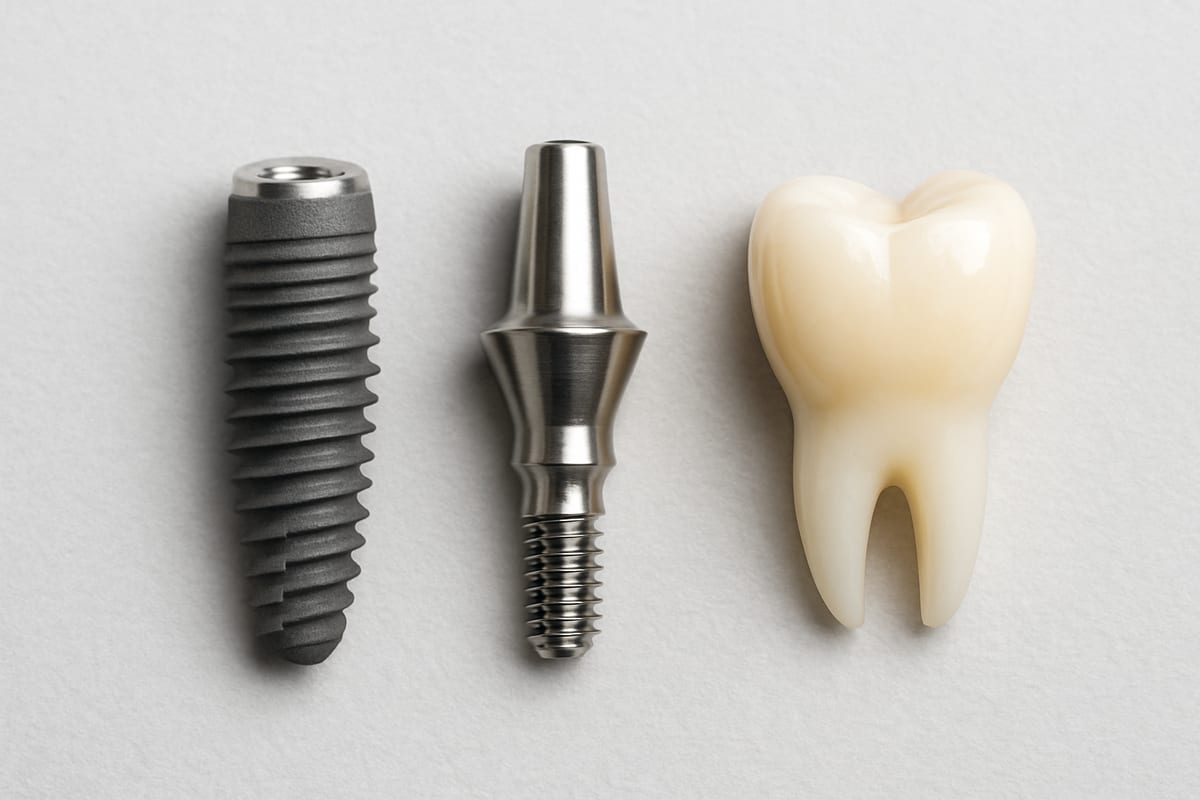
A dental implant isn’t a single piece. It’s a system of three parts working together, and understanding what each one does makes it a lot easier to follow along with your own treatment plan.
Understanding the Parts of an Implant
Every implant restoration is built from a fixture, an abutment, and a crown. Together, these parts replace a missing tooth from the bone up to the chewing surface, restoring both function and appearance rather than just filling a visible gap.
The Implant Fixture: The Root
The fixture is the part placed into your jawbone, typically made of titanium or zirconia, functioning as an artificial tooth root. Good integration between the fixture and your surrounding bone is what gives the whole restoration its long-term strength, which is part of why bone quality is evaluated so carefully before treatment begins.
The Abutment: The Connector
The abutment links the fixture below the gumline to the crown above it. Depending on your case, it may be a stock option or custom-fabricated, and it can be either screw-retained or cemented in place. The choice between these affects both how the crown is placed and how it can be serviced later if needed.
The Crown: The Visible Tooth
The crown is the part you actually see and use to bite and chew, usually made from porcelain or ceramic for a natural appearance. With proper care, a well-made crown typically lasts 10 to 15 years or longer before it needs replacement.
Variations, Materials, and What Affects Your Choice
Material and design choices for each part aren’t arbitrary. Your dentist factors in your health history, the shape and health of your gums, and how much force your bite naturally generates when deciding what fits your case best. A patient who grinds their teeth, for example, may need different material considerations than one who doesn’t.
How to Choose the Right Implant Parts
The best way to determine the right combination of fixture, abutment, and crown for your situation is a full evaluation, including imaging, at our office. From there, we’ll walk through what’s recommended for your case and why, rather than defaulting to a generic setup.
Ready to Learn More About Your Options?
Schedule an evaluation to find out which implant components are the right fit for replacing your missing tooth.