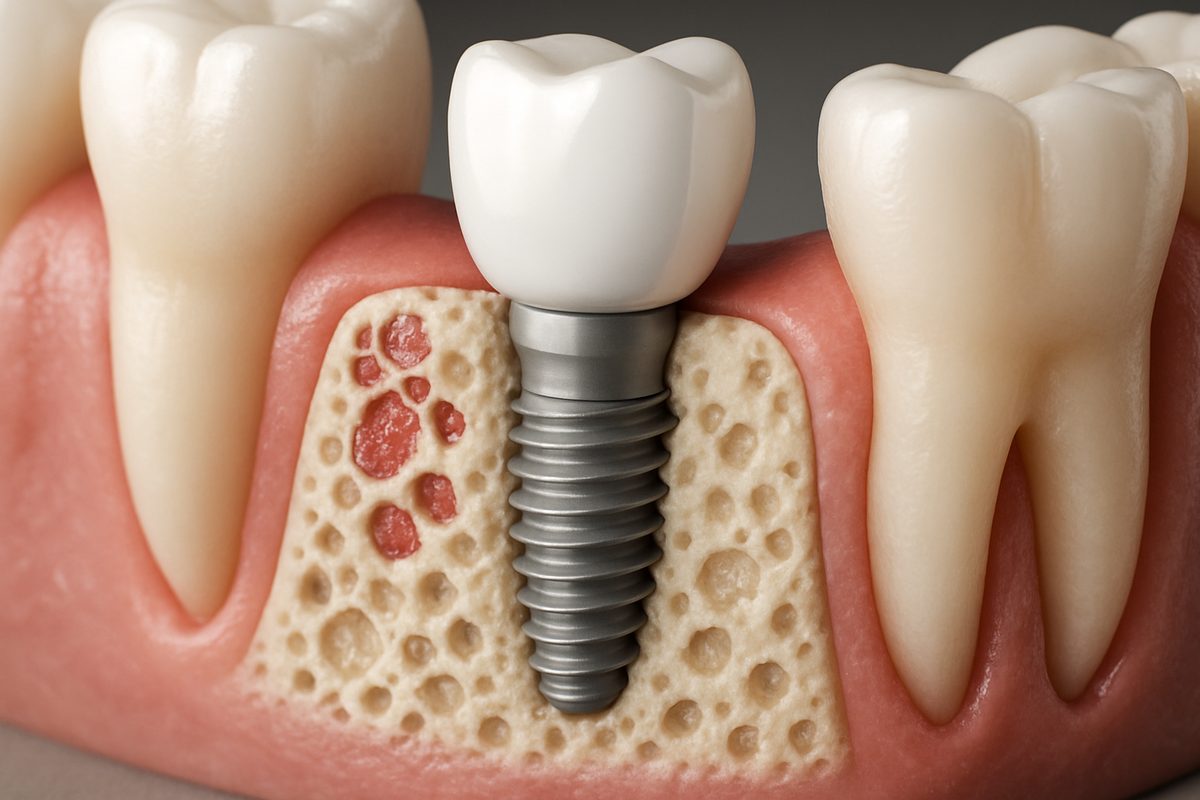
Many patients ask: is bone grafting for dental implant always needed? The short answer is no — but it’s often recommended when jawbone is too thin or too low to hold a dental implant securely. This article explains what bone grafting involves, why it may be needed, the types of grafts, what to expect during treatment, alternatives, and key questions to ask your implant dentist so you can decide with confidence.
What is bone grafting?
Bone grafting rebuilds lost jawbone so a dental implant has a strong foundation. Bone loss can happen after tooth loss, from gum disease, or from trauma. Grafting replaces or encourages new bone where the ridge is too narrow or short for a dental implant.
Why bone grafting for dental implant may be needed
Insufficient bone height or width
Thin or short jaw ridges can prevent a stable, long-lasting dental implant. If the dental implant would sit partly outside the bone, grafting builds the needed volume.
Sinus proximity and the upper back jaw
In the upper back jaw the sinus can be too close to the dental implant site. A sinus lift or graft raises the sinus floor to create room for the dental implant — common when considering bone grafting for dental implant in Mohegan Lake, NY.
Timing: immediate vs. delayed grafting
Grafting at the time of extraction (socket preservation) can limit future bone loss. When bone has already resorbed, a delayed graft may be required before dental implant placement. Your dentist will advise which timing suits your situation.
Types of bone grafts
Autograft (your own bone)
Taking bone from another site in your mouth or body often integrates best. Pros: high success and faster integration. Cons: extra surgical site and slightly longer recovery.
Allograft, xenograft, synthetic
Donor bone (allograft), animal-derived bone (xenograft), or synthetic materials avoid a second surgery. They offer predictable results and are commonly used in bone grafting for dental implant near Mohegan Lake, NY.
Guided bone regeneration & membranes
Membranes and growth factors help shape new bone and protect the graft while it heals, improving the final result.
What to expect during a bone grafting procedure
Consultation and 3D imaging (CBCT)
A CBCT 3D scan maps bone volume and nearby anatomy, crucial for planning the graft and future dental implant placement.
Procedure steps and anesthesia options
Typical steps: incision, place graft, secure membrane, and close. Local anesthesia, oral sedation, or NuCalm® can make the experience comfortable.
Healing time before dental implant placement
Healing often takes 3–6+ months depending on graft type and location before a dental implant can be placed.
Risks, recovery, and success rates
Expect short-term swelling, mild pain, and bruising. Watch for persistent pain, fever, or wound opening. When done well, grafting greatly improves long-term dental implant stability; success depends on health, smoking status, and surgical technique.
Alternatives to bone grafting for dental implant
Short or narrow dental implants
Modern short or narrow dental implants can avoid grafts in some cases.
Angled dental implants / All-on-X strategies
Angled dental implants or full-arch techniques can bypass deficient areas while still supporting restorations.
Zygomatic or alternative anchorage
For extreme upper jaw loss, zygomatic dental implants anchor in cheekbone and are a specialist option.
Cost and insurance basics
Cost drivers include graft type, surgeon, and extra procedures (sinus lift, membranes). Many dental plans limit graft coverage; financing options are commonly available.
Questions to ask your implant dentist
– Do you recommend bone grafting for my case, and why? – What imaging and tech will you use (CBCT, guided surgery)? – What graft material do you prefer and why? – How long until I can get the dental implant, and what are the risks? – What are your success rates and experience with grafting?
About Advanced Dentistry of Mohegan Lake
Advanced Dentistry of Mohegan Lake offers patient-focused dental implant care by Dr. George Sepiashvili and Dr. Wanda Mejia. The practice uses CBCT scanning, PIEZOSURGERY®, NuCalm® for comfort, and guided planning tools to improve graft and dental implant predictability. Clear treatment plans and flexible financing help patients move forward when grafting is recommended.
Ready to discuss bone grafting for dental implant?
If you’re wondering whether getting a bone grafting treatment for dental implant placement in Mohegan Lake, NY is right for you, contact us to schedule a 3D scan consult to review your bone, options, and a clear plan.