This post explains what an implant dent is and who it helps. You’ll learn the parts of an implant dent, the treatment steps, risks and costs, and when to contact a dentist about an implant dent.
What Is an Implant Dent?
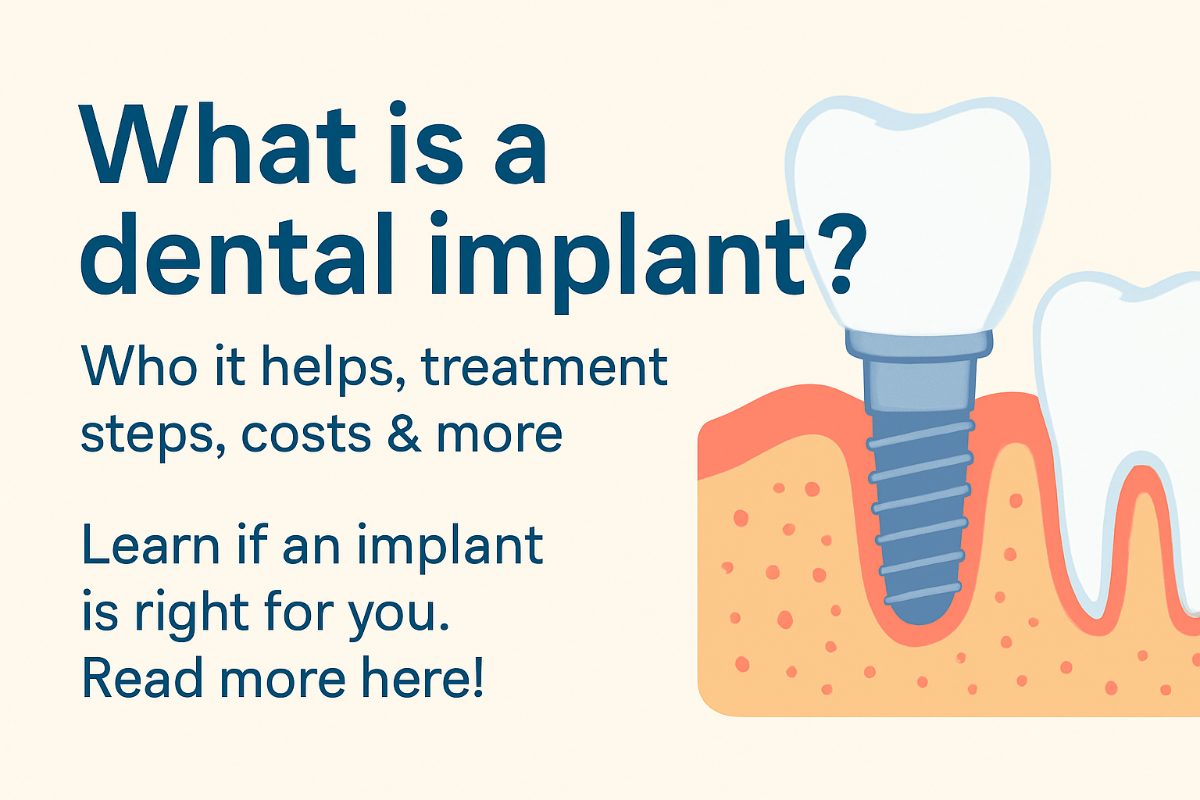
An implant dent is a replacement tooth made of three parts: a titanium post (the implant) that acts like a root, an abutment that connects the post to the visible tooth, and the crown or restoration you see. Replacing the root matters because it restores chewing function and helps preserve jawbone health by stimulating the bone the way a natural tooth root does.
Components of an Implant Dent
The implant fixture
The implant fixture is usually titanium or a titanium alloy. It’s placed into the jawbone and fuses with bone through osseointegration, creating a strong, lasting foundation for the tooth.
The abutment and crown
The abutment links the implant to the crown. Crowns can be porcelain, ceramic, or zirconia and are chosen for strength and appearance. Material and design affect how natural the implant dent looks and how well it withstands chewing forces.
Who Is a Good Candidate for an Implant Dent?
Good candidates generally have healthy gums and enough bone to support an implant. Doctors also consider overall health, smoking status, and conditions like uncontrolled diabetes. Age is less important than bone and health. People choose an implant dent for a single missing tooth, a failed bridge, or to stabilize a denture.
Types of Implant Dent Restorations
Options include:
- Single implant crown — used to replace one missing tooth.
- Implant-supported bridge — used when several teeth in a row are missing.
- Implant-retained dentures (overdentures or All‑on‑X) — used for full-arch replacement when multiple teeth are missing or dentures need more stability.
The Implant Dent Treatment Process
Typical steps are:
- Consultation and imaging (often CBCT) to evaluate bone and anatomy.
- Treatment planning, including digital planning and Smile Preview when available.
- Surgical placement of the implant fixture.
- Healing and osseointegration — usually several months for the implant to fuse to bone.
- Final restoration — placing the abutment and crown or prosthesis.
Digital tools speed planning and improve accuracy, and timelines vary by case — expect anywhere from a few months to a year if bone grafting is needed.
Risks, Recovery, and Long-Term Care for an Implant Dent
Short-term effects often include soreness, swelling, and minor bleeding that resolve in days to a week. Rare complications can include infection, implant failure, or nerve irritation. Overall success rates for implants are high — commonly over 90–95% with proper care.
To help an implant dent last for decades:
- Keep excellent oral hygiene and clean around the implant daily.
- Attend regular dental checkups and professional cleanings.
- Avoid smoking and manage chronic health conditions.
Cost Factors and Financing for an Implant Dent
Costs vary based on:
- Number of implants and type of restoration.
- Need for bone grafting or sinus lift procedures.
- Materials used for the crown or prosthesis and lab work.
- Use of advanced technologies (CBCT, guided surgery, digital design).
Insurance often limits implant coverage. Many practices offer patient financing or payment plans to spread costs and make an implant dent more affordable.
Why Choose NewsSmile4U for Your Implant Dent
NewsSmile4U is a two‑doctor practice with focused implant training and restorative experience. We use advanced tools to improve comfort and predictability, including CBCT imaging, Smile Preview, NuCalm for relaxation, and The Wand for gentle anesthesia. The team emphasizes clear planning, comfort-focused care, and patient-friendly financing to support treatment decisions.
Next Steps: How to Learn If an Implant Dent Is Right for You
To find out if an implant dent in Mohegan Lake or an implant dent in Tarrytown, NY is right for you, schedule a consult for a personalized exam and CBCT review. The NewsSmile4U team will explain your options, timelines, and financing so you can choose a plan that fits your health and budget.