Many people ask what denture implants are and how they compare to the dentures they grew up with. Denture implants combine small titanium posts placed in the jaw with a prosthetic set of teeth. Patients ask because implant options often feel, work, and last very differently from traditional removable dentures. This article explains what are denture implants in Mohegan Lake, NY, the types available, how they differ from conventional dentures, and what to expect if you’re considering them.
What Are Denture Implants?
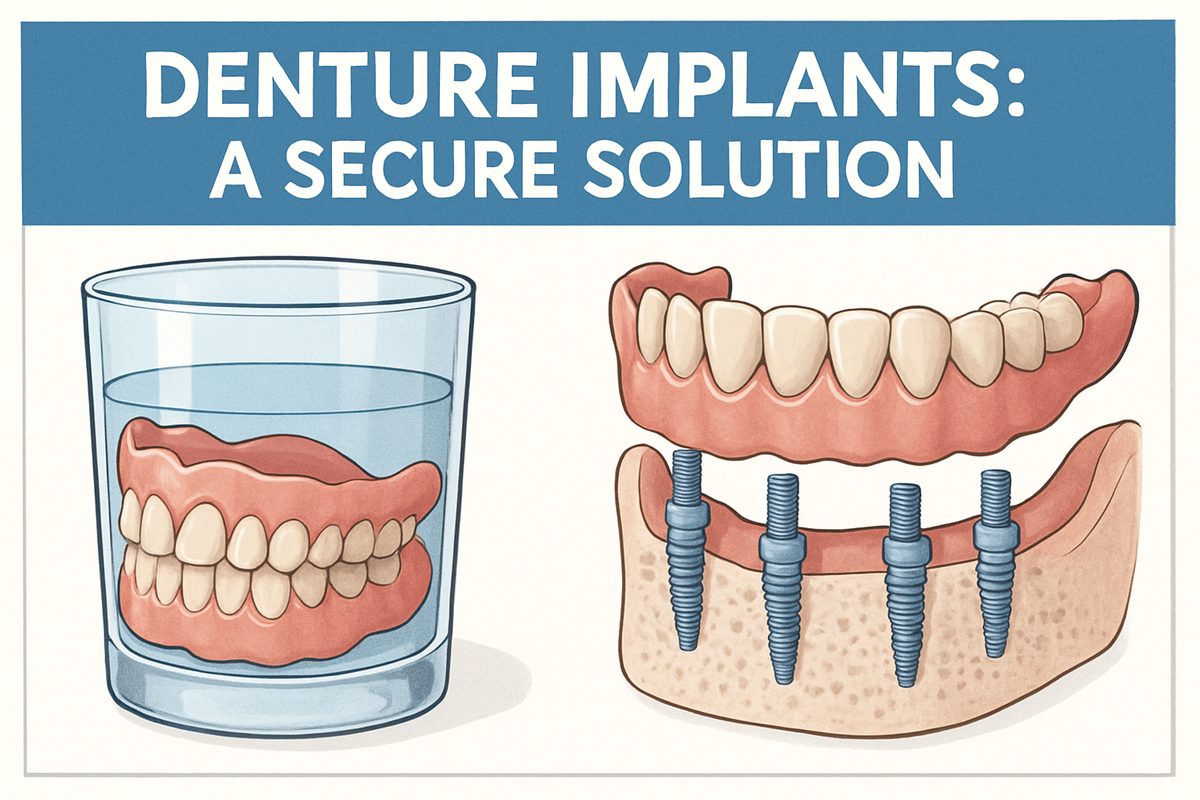
When people ask what denture implants are, they typically refer to a system where dental implants (made of titanium) serve as anchors for a denture prosthesis. The implants fuse with the bone to form a stable base, and the prosthesis can be an overdenture that snaps into place or a fixed bridge that remains in place. Basic parts: the implant post, an abutment (connector), and the denture prosthesis (removable overdenture or fixed full-arch restoration).
Types of Denture Implants
Implant‑retained overdentures
Overdentures snap onto 2–4 implants. They are removable by the patient for cleaning but feel far more secure than regular dentures. They’re often used when cost or bone limits rule out a full fixed bridge.
Fixed implant bridges / full‑arch restorations
Fixed options, such as All-on-4 or full-arch implant bridges, are not removed by the patient. They attach permanently to multiple implants and restore chewing ability close to natural teeth.
Hybrid options (removable vs fixed)
Some solutions combine features: a sturdier, removable prosthesis with a fixed-like fit, or a screwed-in bridge that a dentist can remove. Choice depends on budget, bone volume, and personal preference.
How Denture Implants Differ From Traditional Dentures
Stability and chewing function
Denture implants offer significantly improved stability and bite force. You can eat firmer foods with less worry about slipping or adhesives.
Bone preservation
Implants stimulate the jawbone and slow bone loss. Traditional dentures rest on gums and can accelerate jawbone shrinkage over time.
Speech, comfort, and confidence
Implant-supported prostheses reduce sore spots and slipping, often improving speech and confidence while eating and talking.
Maintenance and lifespan
Traditional dentures need relines and replacement more often. Implant restorations require regular dental checkups and hygiene, but usually last longer and feel more like permanent teeth.
Who Is a Good Candidate?
Good candidates are generally in good overall health, committed to maintaining good oral hygiene, and have sufficient jawbone volume. Smokers, people with uncontrolled diabetes, or severe bone loss may need extra care, grafting, or sinus lifts before implants are possible. Realistic expectations and willingness to follow the treatment plan are important.
What to Expect: The Treatment Process
Consultation and planning
A dentist will examine your mouth, take impressions, and use 3D imaging (CBCT) to map bone and plan implant placement.
Implant placement and healing
Surgery places implants in the jaw. Healing (osseointegration) takes several months, while temporary teeth may be worn in the meantime.
Attachment and final restoration
Once healed, abutments are placed, and the final overdenture or fixed prosthesis is attached and adjusted for fit and bite.
Costs, Insurance, and Financing
Costs vary depending on the number of implants, the need for grafts, and the type of prosthesis. Insurance often offers limited coverage; many practices provide financing plans to spread payments.
Care After Getting Denture Implants
Daily cleaning, avoiding hard impacts, and routine dental visits keep implants healthy. Watch for looseness, pain, or signs of infection and contact your dentist promptly.
Why Choose Advanced Dentistry of Mohegan Lake for Denture Implants
Advanced Dentistry of Mohegan Lake features a two-doctor team with implant training, CBCT planning, and advanced technologies to enhance comfort and outcomes. They focus on clear planning, predictable results, and flexible financing to help patients get the care they need.
Next Steps: Ready to Learn More?
If you want a personalized answer to “what are denture implants in Mohegan Lake, NY,” schedule a consultation to review imaging and a treatment plan. Contact the office to discuss options, costs, and the best next step for your smile.