What Causes TMJ Disorder? Symptoms, Causes, and Treatment Options
Do you frequently experience jaw pain, headaches, clicking sounds when opening your mouth, or discomfort while chewing? These symptoms may be related to a temporomandibular disorder, commonly called TMJ disorder or TMD.
TMJ disorder can develop from several factors, including jaw injuries, teeth grinding, arthritis, muscle tension, and problems affecting the jaw joint. In many cases, there is no single identifiable cause. Fortunately, TMJ treatment options can help reduce discomfort, improve jaw movement, and restore everyday function.
At Advanced Dentistry of Mohegan Lake, we understand how frustrating persistent jaw discomfort can be. Learning to recognize TMJ symptoms and understanding available treatments can help you take the next step toward relief.
What Is TMJ Disorder?
The temporomandibular joints (TMJs) connect your lower jaw to your skull, just in front of each ear. These joints work with the surrounding muscles and ligaments to help you speak, chew, swallow, and open or close your mouth.
Temporomandibular disorders (TMDs) are a group of conditions affecting the jaw joints, chewing muscles, and related structures.
Although the terms TMJ and TMD are often used interchangeably, TMJ technically refers to the joint itself, while TMD describes disorders involving that joint and the surrounding muscles.
When these structures become painful or do not function properly, patients may experience jaw stiffness, limited movement, headaches, and difficulty chewing.
TMJ disorders can range from mild, temporary discomfort to persistent pain that interferes with daily activities.
What Are the Most Common TMJ Symptoms?
TMJ symptoms vary depending on whether the condition primarily affects the jaw muscles, the joints, or both.
Common symptoms include:
- Jaw pain or tenderness: Discomfort near the jaw joint, cheeks, or temples.
- Clicking or popping sounds: Noises when opening or closing the mouth, sometimes accompanied by pain.
- Difficulty chewing: Discomfort when eating tough, chewy, or crunchy foods.
- Jaw stiffness: A tight or restricted feeling when opening the mouth.
- Frequent headaches: Pain around the temples or other areas associated with jaw muscle tension.
- Ear discomfort: Earaches, pressure, or ringing in the ears that may accompany jaw problems.
- Jaw locking: Episodes where the mouth becomes difficult to open or close.
- Changes in jaw movement: Difficulty opening the mouth fully or moving the jaw comfortably.
Not everyone who experiences jaw clicking has a TMJ disorder. Clicking without pain or limited movement is common and often does not require treatment.
However, persistent jaw pain, painful clicking, or difficulty opening your mouth should be evaluated by a dental or healthcare professional.
What Causes TMJ Disorder?
There isn’t always one specific cause of TMJ disorder. Instead, symptoms may develop from a combination of mechanical, muscular, inflammatory, and behavioral factors.
Understanding these potential causes can help guide appropriate treatment.
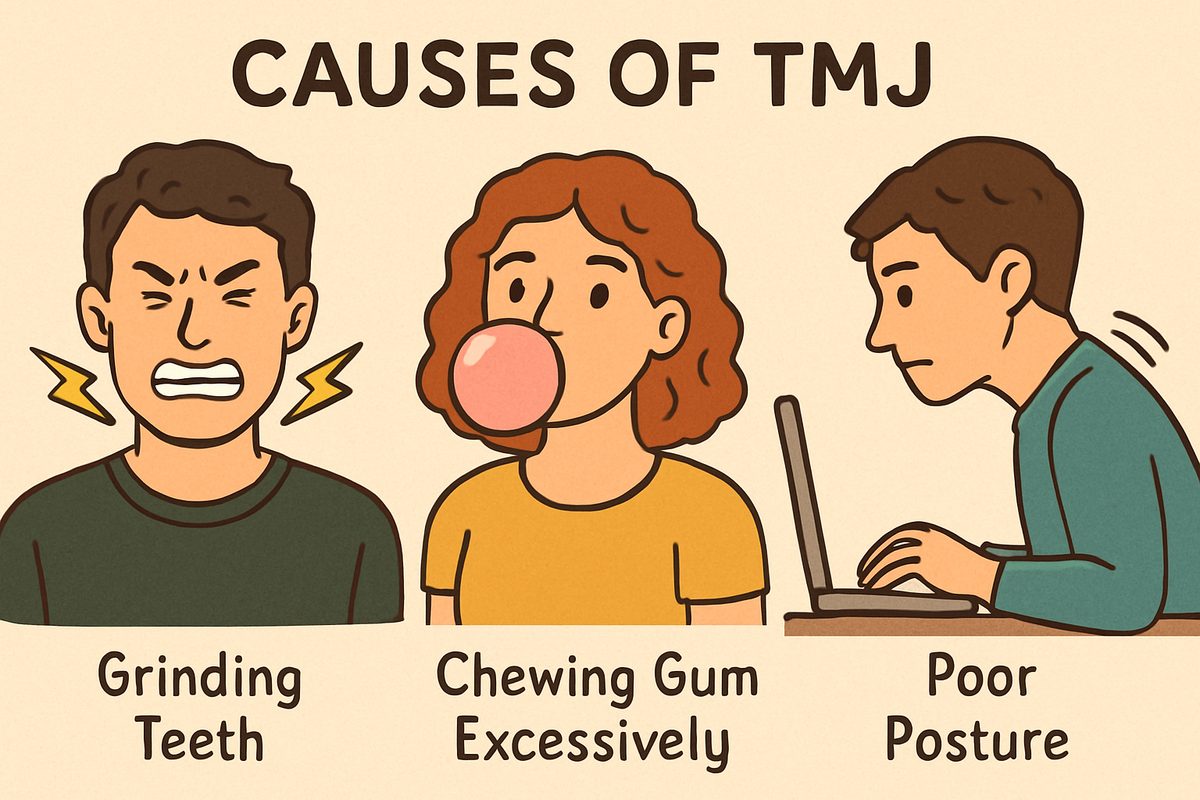
1. Teeth Grinding and Jaw Clenching (Bruxism)
Teeth grinding and jaw clenching, collectively known as bruxism, can place additional strain on the jaw muscles.
Some people grind their teeth while sleeping, while others clench their jaws during the day, particularly when concentrating or feeling stressed.
Over time, excessive muscle activity may contribute to jaw soreness, facial fatigue, headaches, and tooth wear.
Although bruxism and TMJ disorders can occur together, grinding does not cause every case of TMD.
If you frequently wake up with jaw discomfort or notice signs of tooth wear, a dental examination can help determine whether bruxism may be contributing to your symptoms.
2. Jaw Injuries or Trauma
Injuries to the face or jaw can affect the temporomandibular joints and surrounding muscles.
Potential causes include sports injuries, falls, accidents, or a direct impact to the jaw.
An injury may cause inflammation, muscle strain, or damage to the joint structures. Some patients develop symptoms immediately, while others notice discomfort after the initial injury.
Persistent pain or restricted jaw movement following trauma should be professionally evaluated.
3. Arthritis Affecting the Jaw Joint
Arthritis can affect the temporomandibular joints just as it affects other joints throughout the body.
Osteoarthritis may involve changes in the joint surfaces, while inflammatory conditions such as rheumatoid arthritis can cause joint inflammation and discomfort.
Patients with arthritis-related TMJ problems may experience stiffness, pain, or reduced jaw mobility.
Treatment depends on the type of arthritis, the severity of symptoms, and whether other joints are affected.
4. Stress and Muscle Tension
Stress does not directly explain every TMJ disorder, but it can contribute to muscle tension and jaw clenching.
Some patients unconsciously tighten their jaw muscles throughout the day, particularly during stressful situations.
This sustained muscle activity can contribute to soreness, fatigue, and discomfort around the jaw and temples.
Stress management, relaxation techniques, and improved awareness of jaw positioning may help patients whose symptoms involve muscle tension.
5. Problems With the Jaw Joint Disc
Each temporomandibular joint contains a small disc that helps cushion the joint and supports smooth movement.
In some patients, the disc may move out of its usual position or fail to move normally with the jaw.
This can contribute to clicking, popping, restricted movement, or episodes of jaw locking.
However, disc displacement does not always cause pain, and some people have changes in disc position without noticeable symptoms.
A professional examination is necessary to determine whether joint disc problems are contributing to discomfort.
6. Other Factors That May Contribute to TMJ Pain
Additional factors can include muscle overuse, certain inflammatory conditions, and individual differences in pain sensitivity.
Bite problems are sometimes discussed in connection with TMJ disorders, but research has not established that routine dental misalignment is a primary cause of most TMD cases.
For this reason, irreversible treatments designed to permanently change the bite are generally not recommended as first-line TMJ therapy.
How Is TMJ Disorder Diagnosed?
Because several dental and medical conditions can cause facial pain, an accurate diagnosis is important before beginning TMJ treatment.
During an evaluation, your dentist may ask about:
- When your jaw pain first started.
- Whether symptoms occur during chewing or speaking.
- A history of teeth grinding or clenching.
- Headaches, ear discomfort, or facial pain.
- Previous jaw injuries.
- Episodes of clicking, popping, or locking.
Your dentist may also examine the jaw joints, evaluate your range of motion, and assess the surrounding muscles for tenderness.
Imaging is not always necessary. However, X-rays, MRI, or other diagnostic imaging may be recommended when the examination suggests a specific joint problem or another condition requiring further investigation.
A comprehensive dental examination can also help rule out tooth-related problems that sometimes resemble TMJ pain.
What Are the Most Effective TMJ Treatment Options?
TMJ treatment depends on the underlying condition, the severity of symptoms, and how much the disorder affects daily activities.
Most patients begin with conservative, reversible treatments rather than surgery or permanent changes to their teeth.
Several approaches may be recommended individually or in combination.
1. Custom Oral Appliances and Night Guards
For some patients, a dentist may recommend a custom oral appliance, sometimes called a splint or night guard.
These appliances fit over the teeth and may help protect them from damage caused by grinding.
Certain splints may also help reduce symptoms for selected patients, although results vary and oral appliances do not cure every type of TMJ disorder.
A custom appliance should be evaluated and monitored by a qualified dental professional to ensure that it fits appropriately and does not create unwanted bite changes.
2. Physical Therapy and Jaw Exercises
Physical therapy may help improve jaw movement, reduce muscle tension, and support more comfortable function.
Treatment may include gentle stretching, strengthening exercises, manual therapy, and guidance on jaw posture.
A physical therapist familiar with temporomandibular disorders can recommend exercises appropriate for the patient’s symptoms.
Avoid forcing the jaw open or performing aggressive exercises without professional guidance, especially if your jaw frequently locks.
3. Medications for TMJ Pain Relief
For short-term symptom management, a healthcare professional may recommend certain medications.
Depending on the situation, these may include over-the-counter pain relievers or anti-inflammatory medications.
Some patients with significant muscle-related symptoms may benefit from prescription treatment.
Medication choices should account for existing health conditions, potential side effects, and interactions with other medications.
4. Lifestyle Changes and Stress Management
Simple changes in daily habits can sometimes reduce strain on the jaw.
These may include avoiding gum chewing, taking smaller bites, choosing softer foods during painful episodes, and becoming more aware of daytime clenching.
Relaxation techniques and behavioral strategies may also be useful for patients whose symptoms worsen during stressful periods.
5. Injections and Other Specialist Treatments
In selected cases, specialists may discuss injections or other interventions for persistent symptoms.
Some treatments, including botulinum toxin injections, are still being studied for TMD, and evidence of long-term benefit is limited.
These approaches are not appropriate for every patient and should be considered only after discussing their potential benefits, limitations, and risks.
6. Surgery for Severe TMJ Disorders
Surgery is generally reserved for carefully selected patients with significant joint problems who have not improved with appropriate nonsurgical care.
Procedures may range from minimally invasive joint treatments to more extensive surgery.
Because surgical treatment carries risks and may cause permanent changes, patients should receive a thorough evaluation and understand their alternatives before proceeding.
How Can You Relieve TMJ Pain at Home?
If you’re experiencing mild jaw discomfort, several self-care strategies may provide temporary relief.
Apply Warm or Cold Compresses
A warm compress may help relax tense jaw muscles, while a cold pack may reduce discomfort following irritation or inflammation.
Use whichever approach feels more comfortable, with a protective cloth between your skin and the compress.
Eat Softer Foods Temporarily
During painful episodes, choose foods that require less chewing, such as eggs, yogurt, cooked vegetables, and soups.
Avoid especially hard, chewy, or sticky foods until symptoms improve.
Avoid Excessive Jaw Movement
Try to avoid chewing gum, biting fingernails, or opening your mouth unusually wide.
Supporting your jaw during a yawn and taking smaller bites may also reduce discomfort.
Practice Relaxed Jaw Positioning
When you’re not eating or speaking, allow your jaw muscles to relax.
Your lips can rest together while your upper and lower teeth remain slightly apart.
Reduce Daytime Clenching
If you frequently clench your teeth, consider setting occasional reminders to check your jaw position.
These strategies may help manage mild symptoms, but they do not replace professional evaluation for persistent or worsening pain.
Can TMJ Disorder Go Away on Its Own?
Yes. Some TMJ symptoms improve over time with self-care, reduced jaw strain, and conservative treatment.
Temporary muscle-related discomfort may resolve within days or weeks, while other conditions can cause symptoms that persist or return periodically.
The recovery timeline depends on the cause of the disorder, the tissues involved, and individual health factors.
If symptoms continue, worsen, or interfere with normal eating and speaking, a dental evaluation can help determine whether additional treatment is needed.
When Should You See a Dentist for TMJ Symptoms?
Occasional jaw clicking without pain is not always a reason for concern. However, ongoing discomfort or changes in jaw movement should not be ignored.
Consider scheduling an appointment if you experience:
- Jaw pain that persists or repeatedly returns.
- Difficulty chewing or opening your mouth.
- Painful clicking or popping.
- Frequent jaw locking.
- Headaches associated with jaw tension.
- Signs of nighttime teeth grinding.
- Increasing discomfort around the jaw joints.
If your jaw becomes stuck open or closed, you experience significant swelling or fever, or you develop severe pain after an injury, seek prompt medical or dental care.
Because TMJ symptoms can overlap with other conditions, professional evaluation is important for determining the appropriate next steps.
Find TMJ Treatment Options in Mohegan Lake, NY
Living with persistent jaw pain, headaches, or difficulty chewing can affect your comfort and quality of life. Understanding what’s causing your symptoms is an important first step toward finding relief.
At Advanced Dentistry of Mohegan Lake, our team helps patients evaluate jaw discomfort and explore appropriate dental treatment options.
Whether your symptoms are associated with teeth grinding, jaw muscle tension, or another oral health concern, a personalized evaluation can help determine the next steps.
If you’re experiencing ongoing TMJ symptoms in Mohegan Lake, Yorktown Heights, Peekskill, or surrounding Westchester County communities, contact Advanced Dentistry of Mohegan Lake to discuss your concerns.
Schedule a dental consultation or call (914) 594-6824 to get started.