
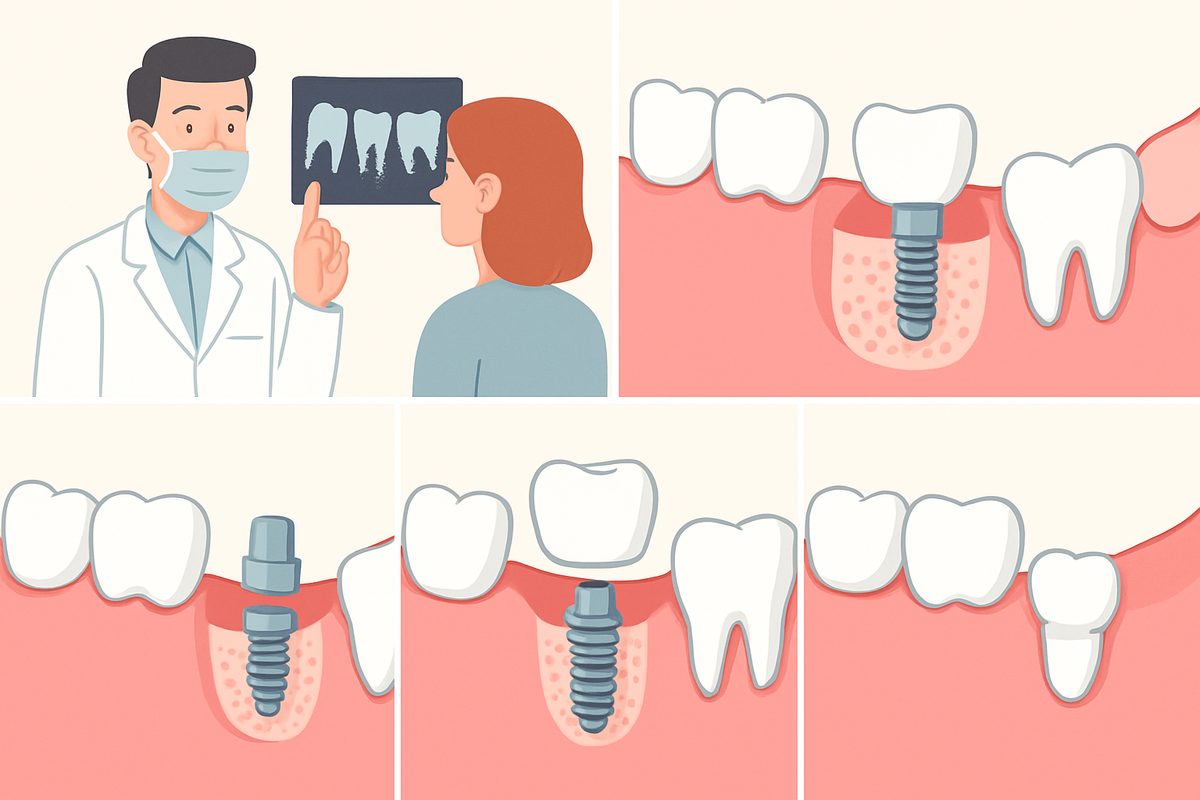
The process of getting a dental implant can feel overwhelming, but it’s a step-by-step treatment that replaces a missing tooth with a strong, long-lasting solution. People who need one often have a lost or failing tooth, want better chewing or a natural-looking smile, and are generally healthy enough for minor surgery. This article walks through the process of getting a dental implant, so you know what to expect at each stage, how long it takes, the risks, the costs, and whether it might be right for you.
Step 1: Initial consultation and treatment planning
At your first visit, the dentist reviews your medical and dental history, examines your mouth, asks about goals, and discusses options. This visit defines whether an implant is the best choice and begins a clear plan for treatment, timing, and cost.
Imaging and diagnostics
Most plans use X-rays or a CBCT scan, along with intraoral photos. These images map bone height and density, as well as the location of nerves and sinuses, so the implant can be placed safely and accurately.
Creating a clear plan
You’ll get a treatment timeline and estimated costs, and note any pre-treatment needs, such as extractions or bone grafting. This plan also covers sedation choices and follow-up visits.
Step 2: Preparatory treatments (if needed)
Some patients need extractions, bone grafts, sinus lifts, or periodontal care before implant placement. These preparatory procedures build a healthy foundation for the implant.
Why these matter
Healthy bones and gums increase the chance that the implant will fuse with the jaw and last for years. Preparatory work can add time and cost, but it improves long-term success.
Step 3: Implant placement surgery
Placement is typically done with local anesthesia and optional sedation. The dentist makes a small incision, positions the titanium implant into the jawbone, and closes the site. Most people go home the same day.
Pain management and comfort
Expect some swelling and mild discomfort for a few days. Pain is usually controlled with over-the-counter or prescribed medications, ice packs, and soft foods. Follow-up instructions cover cleaning, diet, and signs of complications.
Step 4: Healing and osseointegration
Osseointegration is when bone grows around the implant, locking it in place. This usually takes 3–6 months, depending on location and bone quality. Periodic checkups confirm stable healing.
Temporary vs. final restoration
Many patients receive a temporary crown or bridge while healing. Once osseointegration is complete, the final crown, bridge, or denture is made and fitted for function and appearance.
Step 5: Abutment and final restoration
After healing, the abutment (connector) is attached, and impressions or digital scans are taken. The lab makes the final crown or bridge. The dentist checks color, fit, and bite to ensure a natural result.
How long does the entire process take
A single tooth implant often takes 3–6 months from consultation to final crown. Complex cases with grafting or full-arch work can take longer. Faster options exist but depend on bone quality and clinical judgment.
Risks, success rates, and how to lower complication chances
Risks include infection, poor healing, or implant failure. Success rates are high—often 95% or better—when placed by experienced clinicians and when good oral hygiene is maintained. Quit smoking, control medical conditions like diabetes, and follow post-op care to reduce risks.
Costs and financing options
Costs vary with the number of implants, grafting, and materials. Insurance may cover part of the restorative work, but not always the implant itself. Many offices offer financing options, payment plans, or in-house options to spread costs.
About Advanced Dentistry of Mohegan Lake and the team
Advanced Dentistry of Mohegan Lake is a two-doctor practice focused on predictable, patient-centered implant care. The doctors provide implant training and use modern tools such as CBCT, intraoral scanning, digital occlusal analysis, and sedation options to improve accuracy and comfort.
Next steps: Is an implant right for you?
If you’re considering the process of getting a dental implant in Mohegan Lake, NY, book an evaluation to review your health, images, and a personalized plan. Bring a list of medications and any recent dental records. Call the office or request an appointment online to start a clear, one-on-one plan for replacing your tooth.