Place after the “What Leads to TMJ Disorder?” section
Common Causes: What Causes TMJ and Who Is at Risk
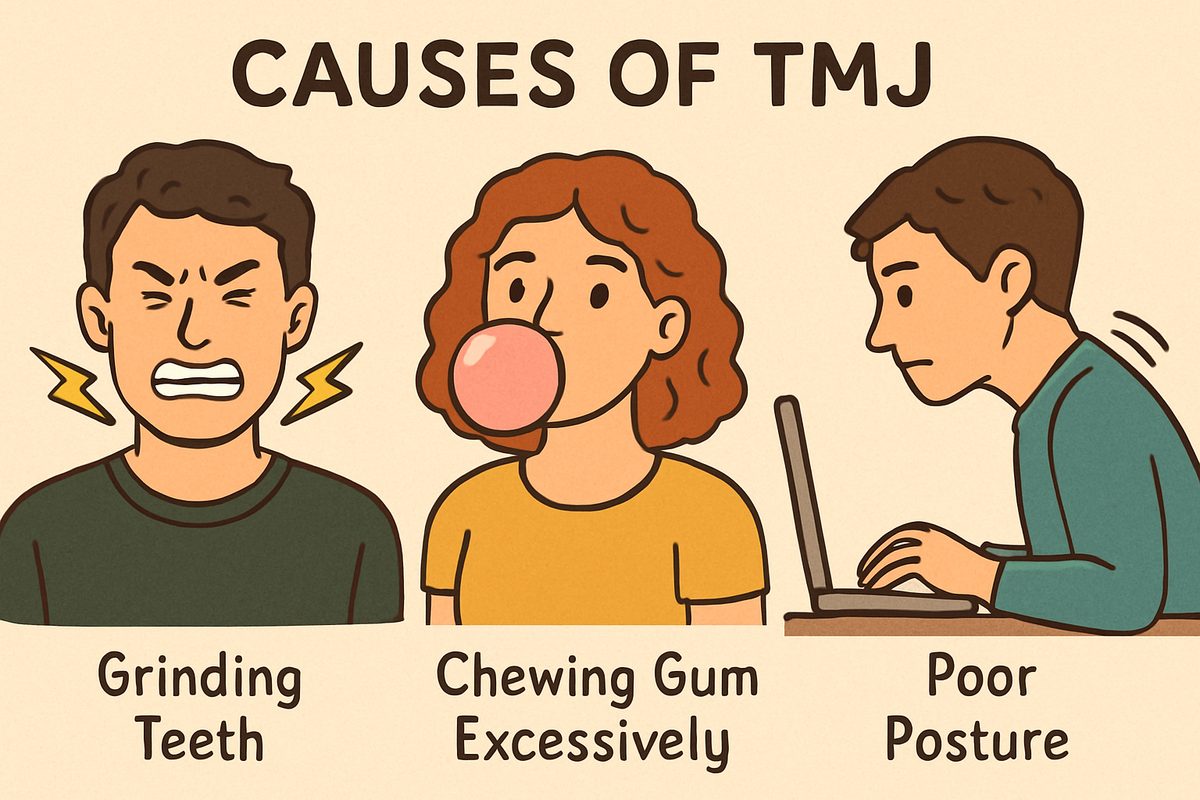
TMJ pain often starts from a mix of muscle and joint problems. Common causes include teeth grinding (bruxism) and jaw clenching, direct trauma to the jaw, head or neck, inflammatory conditions like arthritis, and displaced joint discs. Sometimes several of these factors combine, and in many cases a single clear cause can’t be found. Understanding likely causes helps guide treatment and reduce future flare-ups.
Everyday triggers
- Chewing gum or eating very hard foods
- Biting nails or chewing pens
- Holding a phone between shoulder and ear for long periods
- Prolonged or forceful yawning
- Poor neck or jaw posture (forward head posture)
Medical and structural causes
- Osteoarthritis or rheumatoid arthritis affecting the jaw joint
- Disc displacement inside the joint (disc moves out of place)
- Previous jaw injury or fractures
- Connective tissue disorders that affect joint stability
Who is more likely to get TMD
- Women, especially ages 20–40
- People who have high stress or anxiety levels
- Those with sleep bruxism (nighttime grinding)
- Patients with bite problems or a history of orthodontic issues
Place after the “TMJ: Important Signs and Symptoms” section
Prevention and Early Steps: What Causes TMJ — How to Reduce Risk and When to Seek Care in Mohegan Lake, NY
Because many causes of TMJ are avoidable or manageable, small changes and early care can prevent worse problems. Simple habits at home often ease symptoms and lower the chance of chronic pain. If symptoms persist or worsen, timely evaluation helps identify underlying causes and directs the right treatment before damage or long-term dysfunction occurs.
Simple at-home steps
- Follow a soft-food diet during flare-ups; avoid crunchy or chewy foods
- Stop chewing gum and avoid hard candies or ice
- Try gentle jaw stretches and relaxation exercises (do not force the jaw)
- Use warm or cold packs to reduce muscle pain and swelling
- Practice stress-reduction: deep breathing, short mindfulness breaks, or progressive muscle relaxation
- Consider a custom or over-the-counter nighttime guard if you grind your teeth
When to get professional help
- Pain that lasts more than 2–4 weeks or returns frequently
- Difficulty opening or closing the jaw, or the jaw locking
- Noticeable, progressing change in your bite or how teeth meet
- Severe ear, facial, or head symptoms that affect sleep or daily life
- If home care does not reduce pain or function improves only briefly
What to expect from a dental visit (light practice mention)
- The dentist will take a detailed history and examine jaw movement, muscles, and bite
- They may watch you open, close, and move your jaw and check for joint sounds
- Imaging or objective tests might be recommended for persistent cases
- Practices near Mohegan Lake, NY often use tools like K7 evaluation, J5 TENS, T-Scan, and CBCT to gather precise data and guide treatment planning