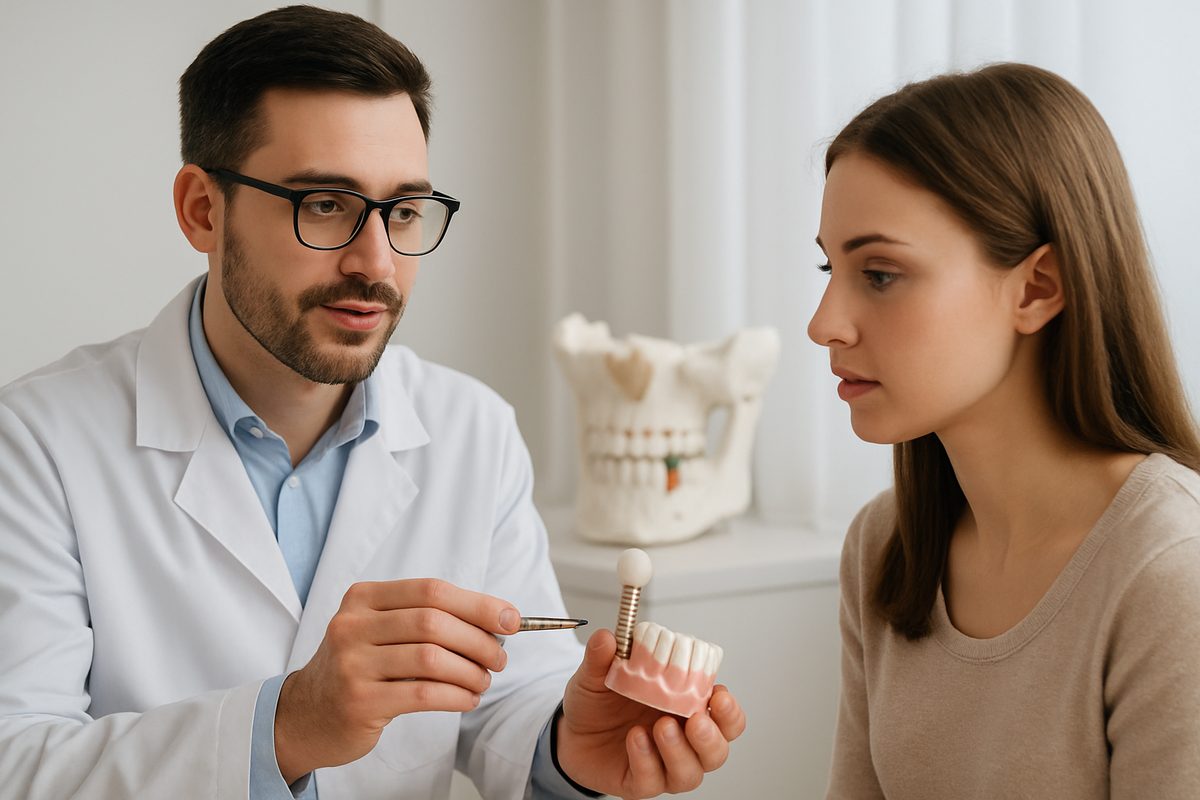
Many patients ask whether to replace a missing tooth with an implant. This post explains who benefits, what the process involves, risks and alternatives, and how to decide. Read on to learn the main benefits, what affects candidacy, the typical timeline, and simple next steps to see if an implant is the right choice.
Top benefits of replacing a tooth with an implant
Dental implants restore chewing and speech nearly like a natural tooth. The implant crown looks and feels natural and won’t shift like a removable denture. Implants preserve jawbone by stimulating bone where the tooth root used to be, helping avoid the sunken look that follows long-term tooth loss. Unlike a traditional bridge, an implant crown does not require cutting down adjacent healthy teeth.
Key factors that determine if you should replace a tooth implant
Oral health and bone
Good gum health and enough bone volume are essential. If the bone has shrunk after a long gap, grafting or a sinus lift may be needed before placing an implant. Active gum infection must be treated first to improve chances of success.
Medical and lifestyle considerations
Chronic conditions and habits affect healing. Well-controlled diabetes, quitting smoking, and discussing medications like bisphosphonates with your doctor improve outcomes. Heavy teeth grinding (bruxism) may require night guards or other planning to protect the implant.
Age and long-term planning
Implants are best for adults with finished jaw growth. They are designed to be a long-term solution, but they need regular maintenance and occasional repairs. Think about lifelong care and replacement parts when planning.
What to expect: the implant process and timeline
Expect an evaluation with an exam and CBCT 3D imaging for precise planning. Treatment typically includes placing the implant post, a healing period for osseointegration (several months), and then attaching an abutment and final crown. If bone grafts or a sinus lift are required, that adds time to the schedule.
Risks, complications, and realistic downsides
Surgical risks include infection, bleeding, and temporary numbness. Implants have high success rates but can fail, especially with poor bone or uncontrolled health issues. Peri-implantitis (gum disease around implants) can occur and needs ongoing care. Non-surgical options have different trade-offs worth considering.
Alternatives to an implant and when they’re better
Fixed bridges replace teeth without surgery but require altering adjacent teeth. Removable partial dentures are faster and less expensive, but can feel less stable. Resin-bonded bridges conserve tooth structure but suit limited cases. Choose alternatives when medical risks, budget, or timeline make implants impractical.
Cost, insurance, and financing options
Costs include the implant post, abutment, and crown; additional grafting raises the price. Many dental plans limit implant coverage. Practices often offer financing options or payment plans to spread costs. Ask for a full estimate that breaks down each part of the treatment.
About Advanced Dentistry of Mohegan Lake and why patients choose us
Advanced Dentistry of Mohegan Lake offers a two-doctor team with focused implant training, using CBCT and guided planning for predictable results. Comfort technologies like NuCalm and The Wand help reduce anxiety and pain. The practice emphasizes clear plans, patient-centered care, and financing options to make implant care accessible.
Decision checklist and next steps
– Do you have healthy gums and enough bone?
– Are medical conditions controlled, and smoking stopped?
– Is an implant within your budget or financing plans?
– Do you want a long-term, natural-feeling solution?
If you can answer these and want to explore whether to replace a tooth implant in Mohegan Lake, NY, schedule an evaluation to get a personalized plan and timeline.